
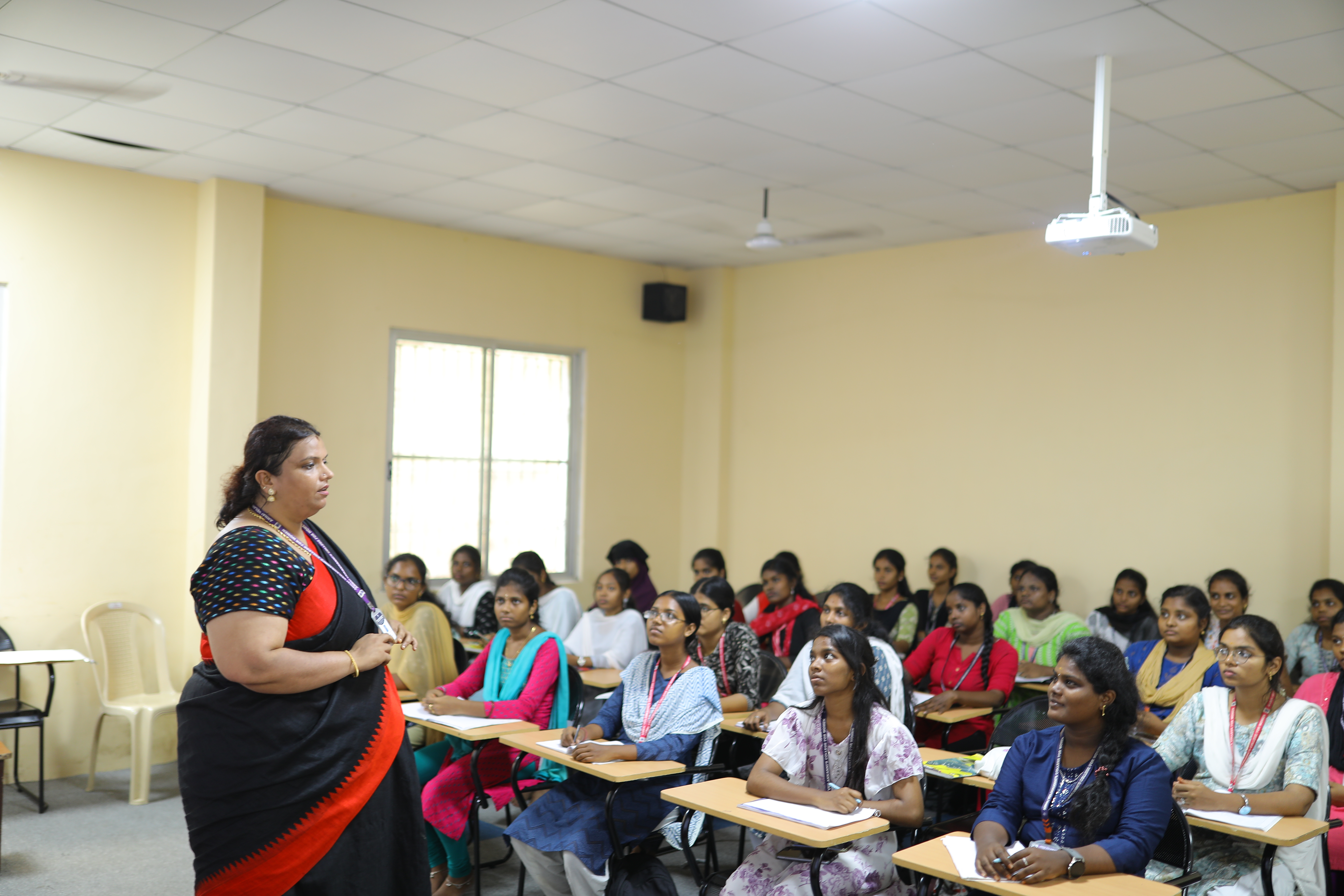
Professional Responsibilities of Faculty
Annai Veilankanni’s College of Arts & Science

Teachers and Their Responsibilities
Teaching is a noble profession that demands integrity, dedication, and accountability. Teachers are expected to align their professional conduct with institutional values, national educational ideals, and ethical standards while nurturing academic excellence and holistic development.
- Maintain responsible conduct, discipline, and professional decorum.
- Demonstrate consistency between personal values and professional practice.
- Engage in continuous professional development through research and training.
- Actively participate in academic forums, seminars, workshops, and conferences.
- Uphold institutional vision, mission, traditions, and cultural values.
- Perform teaching, evaluation, mentoring, and research with dedication.
- Prevent plagiarism and promote academic honesty.
- Support admissions, examinations, counselling, and assessment processes.
- Contribute to extension activities, outreach programs, and community service.
- Serve as role models in ethical, academic, and social behavior.
Teachers and Students
- Respect students’ rights, dignity, and freedom of expression.
- Ensure fairness and impartiality without discrimination.
- Recognize individual learning abilities and support diverse needs.
- Encourage academic excellence, creativity, and leadership skills.
- Promote scientific temper, ethical values, and civic responsibility.
- Guide students beyond classroom hours for academic and personal growth.
- Evaluate students objectively based on merit and performance.
- Foster a safe, inclusive, and supportive learning environment.
Teachers and Colleagues
- Maintain mutual respect, trust, and professional cooperation.
- Support colleagues in academic, research, and institutional initiatives.
- Encourage teamwork and collaborative academic culture.
- Avoid conflicts, false allegations, and discriminatory practices.
Teachers and Institutional Authorities
- Comply with institutional rules, regulations, and contractual obligations.
- Participate constructively in governance and policy development.
- Avoid external engagements that hinder academic responsibilities.
- Ensure timely completion of academic schedules and duties.
- Maintain transparency, accountability, and professional integrity.
Teachers and Non-Teaching Staff
- Promote teamwork, respect, and cooperative functioning.
- Recognize non-teaching staff as integral partners in institutional growth.
- Support participatory and inclusive workplace culture.
Teachers and Guardians
- Maintain effective communication with parents and guardians.
- Share academic progress, discipline, and student development.
- Encourage parental involvement in institutional activities.
Teachers and Society
- Recognize education as a public service and social responsibility.
- Contribute to moral, intellectual, and cultural development of society.
- Participate in social awareness and national development initiatives.
- Promote harmony, unity, and ethical citizenship.
Director of Physical Education / Librarian
- Uphold professional integrity and institutional values.
- Discourage plagiarism and unethical practices.
- Actively contribute to student development and community engagement.
- Ensure inclusive and respectful academic environment.
Note: Tamil Nadu State Government Servant Conduct Rules shall be strictly followed.
Role of the College Principal
- Provide ethical, visionary, and value-based leadership.
- Ensure transparency, fairness, and institutional accountability.
- Promote innovation, collaboration, and sustainable practices.
- Strengthen academic quality and service to society.
- Foster a culture of professionalism and excellence.